
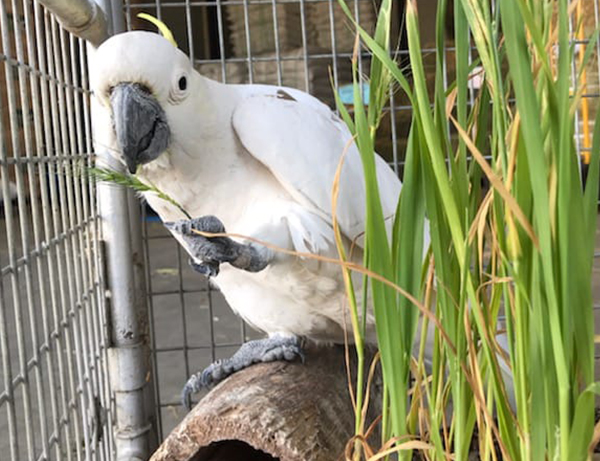
Sprouted seeds are an extremely valuable and nutritious addition to a bird’s diet. Most birds find it very palatable and the nutrients are more readily digested than dry seed. Sprouted seeds also contain larger quantities of carbohydrates and protein, but also have less fat than found in dried seeds. This makes it especially important for breeding season and when chicks have hatched, young fledglings or breeding birds that have more demanding nutritional requirements. However, all birds at any time of the year will benefit from spouted seeds a couple of times a week.
Sprouted seeds are not only for all Parrots, but are also suitable for Finches, Canaries, and even large birds like Chickens, Ducks, Guineafowl and many more. The quantity is based on how many birds you have and how large they are. For the smaller flight birds, a small container or pot with a thick layer of seed is a good amount, because when the seeds sprout, it will look like a thick grass that the birds can dig in. For the larger birds a trough or a larger pot will do, with a thick layer of seed to make a grass like thickness. Chickens will dig the seeds out, so a good idea so a good option to ruining the lawn!
Seeds should take at least a week to germinate, so we aim to have a few in different stages of the growth cycle. You’ll find the sprouted seeds trolly at the front of our store.
Seeds that a suitable are:
- French White Millet
- Millet Seed
- Linseed
- Safflower
- Grey Stripe Sunflower
- Wheat
- Oats
- Barley
Difference between water sprouting and soil:
Birds could contract a fungus infection or a respiratory illness from seeds that are sprouted in water. The reason being, that when you sprout seeds in water, the seed needs cleaning every few hours so that the seed does not get any slimy textures and mould growing. This is one way respiratory infections in birds occur because they eat a seed that has mould on it and breathe in the mould, that equals a very sick bird, and we all know with birds, they show signs when it’s too late! Water sprouting is a risky procedure.
Sprouting in soil means less chance of the seed becoming mouldy. The soil promotes germination by holding warmth and water. Once the seed has sprouted, it will last like another plant, where-as water sprouted seeds quickly lose their freshness.











COBBER WORKING DOG COMPETITION!
Think you’ve got a good eye? Guess how many Cobber biscuits are in the jar for your chance to WIN!
Simply purchase 1 bag of Cobber Working Dog in-store during September to enter.
Correct guess: WIN 3 FREE bags
Closest guess: WIN 2 FREE bags
Have a look at the jar, lock in your guess and you could be taking home some free Cobber!
Competition runs 1st–30th September only
Enter in-store at Sanders Fodder
Good luck!
#SandersFodder #CobberWorkingDog #CobberDogFood #WorkingDogs #Competition #GawlerSouth ... See MoreSee Less
Call Now
Sanders Fodder
tel:+61885224450
Selling food and supplies for animals large or small. Along with rural, garden, tack & animal health1 CommentsComment on Facebook
SEPTEMBER POULTRY PROMO!
From 1st–30th September, purchase any 2 Barastoc Poultry products in-store and receive a FREE Barastoc feed scoop! 💛
Whether you’re topping up on Grain Mix, Golden Yolk, Free Range or another favourite from the Barastoc poultry range, it’s the perfect time to stock the feed shed and grab a handy scoop while you’re at it.
1st September – 30th September
Buy any 2 Barastoc Poultry products
Receive 1 FREE Barastoc scoop
Available at Sanders Fodder, Gawler South while stocks last.
One scoop per transaction. While stocks last.
#SandersFodder #Barastoc #BarastocPoultry #BackyardChickens #ChickenKeeping #PoultryFeed #Gawler #GawlerSouth #SouthAustralia ... See MoreSee Less
0 CommentsComment on Facebook
DON’T MISS OUT! 20% OFF THESE BAINBRIDGE PRODUCTS!
Our August Bainbridge Sale is still on, with 20% off selected Bainbridge products while current stock lasts!
From hay feeders and anti-tip feeders to other handy stable essentials like mounting steps. It’s a great chance to grab some quality gear and save while you’re at it.
Sale ends 31 August, so make sure you pop into Sanders Fodder before the month is over!
#Bainbridge #BainbridgeSale #AugustSale #TwentyPercentOff #HorseSupplies #StableSupplies #EquestrianSupplies #HorseOwners #GawlerSouth #SandersFodder #ShopLocalSA ... See MoreSee Less
0 CommentsComment on Facebook
WE HAVE A WINNER!
A huge congratulations to the lucky winner of our Johnson’s competition, who has now collected her Johnsons Prize Pack!
Thank you to everyone who purchased Johnson’s feed, entered the draw and got behind the competition throughout July. We loved seeing so many entries come through and truly appreciate all the support from our wonderful customers!
We hope our winner gets plenty of use out of her new prize—and don’t worry if you missed out this time, there will be more competitions and giveaways to come!
A big thank you as well to Johnson’s Natural Formula for helping us put together such a great promotion.
#SandersFodder #JohnsonsNaturalFormula #CompetitionWinner #Congratulations #HorseFeed #HorseCare #EquestrianSA #AdelaideHorses #GawlerSouth #ShopLocalSA ... See MoreSee Less
2 CommentsComment on Facebook
August Bainbridge Sale 20% Off!
Save 20% on selected Bainbridge products throughout August, while current stock lasts! Whether you need a sturdy mounting block, a practical anti-tip feeder, or a durable hay feeder, now is a great time to upgrade your stable setup and save.
These hard-wearing products are ideal for everyday use around the yard, paddock and stable. Drop into Sanders Fodder to check out the selected Bainbridge range included in the sale.
Sale ends 31 August.
#bainbridge #AugustSale #bainbridgesale #twentypercentoff #horsesupplies #StableSupplies #antitipfeeder #equestriansupplies #gawlersouth #sandersfodder #ShopLocalSA ... See MoreSee Less
0 CommentsComment on Facebook